Most dives were between 25 and 45 feet. The deepest dive was during one of the scouting tours to 52 feet. Fish were distributed throughout the water column, but larger fish were, for the most part, deeper (45 to 60 feet). Most of the bigger fish I shot were deeper than 35 feet, but I did find a few in shallower water. The water temperature ranged between 55°F and 59°F with an average of 56°F. I was plenty warm and comfortable wearing a 6.5mm OMER open-cell wetsuit (4 hours in the water and about 6 hours wearing the suit each day). I did pick up a pair of 5mm mitts from Tonny...the 3mm gloves I brought were not quite enough after 4 hours of diving. I fished with a 90cm (36") OMER Cayman HF and a 140cm (55") Wong CF Hybrid. Both performed well in these conditions, although the OMER was a bit short. Most competitors used a 100cm-120cm euro-gun with one band. The typical gear was rigged for fast shooting, fish stringing, and re-loading. Speed was important. Most thought the Wong was overkill or too beautiful to risk losing, but given the clear water, it allowed for some long shots...didn't miss a single fish...
During the tournamnent, my deepest dives were less than 50 feet; the average was about 30 feet. My average dives, including short drops, were about 40 seconds and longest dives just over a minute. Given the visibility, if there were no fish, I went back to the surface and moved on. If I saw fish during the descent or soon after reaching the bottom, I would wait them out, allow them to approach, and then shoot. Given the number of fish necessary to be competitive, there wasn't a lot of time to waste. Also, the pollock and cod were difficult to stalk. If they saw you...they were gone... Calm and quiet was the key. I remember one pollock that I shot the second day... It swam up behind me and I had to turn 180 degrees for the shot. With a rock face to one side, I did not have many options, so I turned slowly, aimed, and shot at very close range...one more on the stringer.
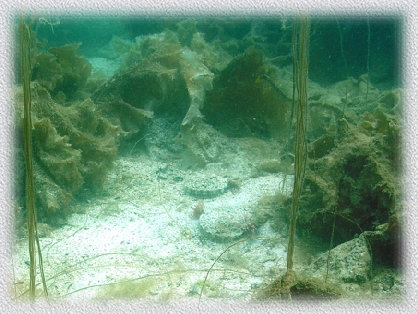
Best competitors were diving in 45-60 feet (14-18m) of water Visibility ranged from 40 to 50 feet. I was told that in the winter months, the visibility improves to over 100 or even 200 feet. Due to the Gulf Stream, the water does not freeze in the winter. It stays warmer than our waters. Similarly, the air temperatures, although cold, stay above freezing in this part of Norway.
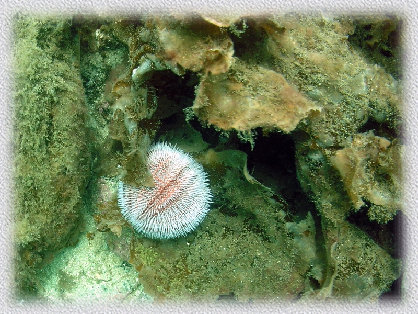
Common
sea urchin - rød kråkebolle (Echinus esculentus)
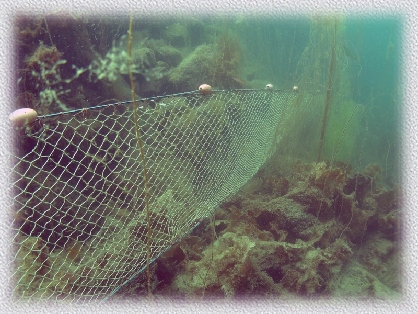
Flounder net
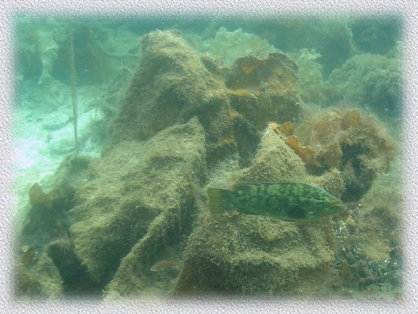
Ballan wrasse - berggylt (Labrus bergylta)
Crevice brittle star - kameleonslangestjerne(Ophiopholis aculeata)
Great scallops -stort kamskjell (Pecten maximus)
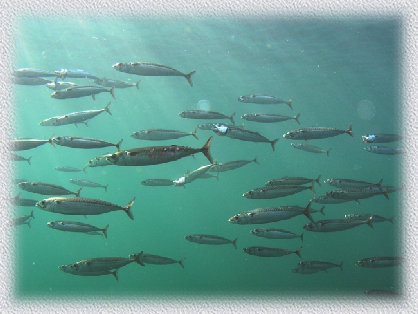
Mackerel - makrell (Scomber scombrus)
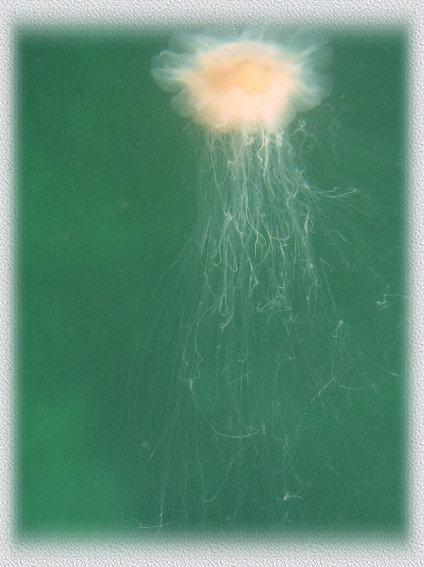
Lions mane jellyfish - rød brennmanet(Cyanea capillata)
